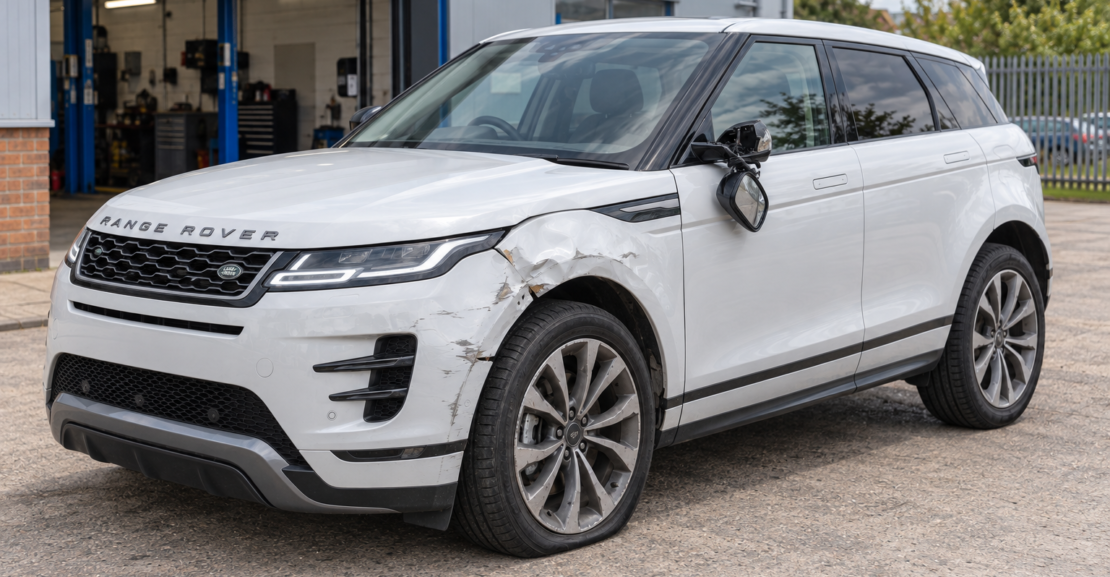
Salvage explained / Behind the decision
Why do insurers write off cars with light damage?

Why a small-looking impact can lead to a total loss, and how repair costs, parts delays and replacement transport can affect the economics.
Visible damage is only part of the picture. An insurer considers the cost and practicality of repair against the vehicle’s value. Delays and associated costs can make an apparently modest repair less economical.
The photographs do not show the whole bill
A cracked bumper or bent wing can look straightforward in an advert. Before pricing the job, a repairer still needs to establish what sits behind the damaged area and what work is needed to put the vehicle right.
Ask for an estimate that separates parts, labour, paint and any diagnostic or calibration work the repairer identifies. Include VAT where payable. This makes it much easier to understand the difference between “a replacement panel costs £200” and the cost of a completed repair.
Parts on back order can change the timetable
A vehicle can occupy a repair slot or remain unusable while an essential part is unavailable. The Financial Ombudsman recognises parts shortages as a possible reason even apparently simple repairs take longer. Read its guidance on repair delays.
For your own buying decision, ask whether the quoted parts are actually available. A low estimate built around an unavailable part may be less useful than a slightly higher estimate with confirmed supply. Get the expected lead time in writing and allow for changes.
Where do courtesy cars and hire costs fit?
If replacement transport is being provided or paid for under the claim, a longer repair can add cost. The precise arrangement matters: a policy courtesy car is not necessarily the same thing as a credit-hire vehicle arranged by an accident management company. Entitlement and responsibility for costs depend on the arrangement; do not assume every claim includes unlimited hire. The Ombudsman explains credit hire.
Those possible costs help explain the economics; they do not prove why a particular car was written off. For that, ask for the insurer’s assessment.
A simple illustration
Imagine a car valued at £8,000 before damage. Repairs are estimated at £4,500. An assumed £40 per day of replacement transport over 30 days adds £1,200, bringing those two items to £5,700 before any other relevant costs.
This is not an insurer’s formula, a hire quotation or a fixed write-off threshold. It shows why the duration of a repair can matter as well as the price of its parts.
Why might it still suit a salvage buyer?
A buyer may have different sourcing options or be able to wait without paying for replacement transport. That can change their own project budget, but it does not reduce the standard of repair needed.
There is no universal percentage at which every insurer must write off every car. The Ombudsman considers the estimated costs and the vehicle’s circumstances when assessing whether a decision was reasonable. See its approach to repair-versus-write-off complaints.
Before buying, price the work with your own repairer and leave room for findings that only become clear during inspection.
General UK guidance, checked on 17/09/2026. Individual claims, repair requirements and insurance terms vary. Follow the relevant insurer’s and official guidance for your vehicle.