Salvage explained / Auction markings
Copart UK windscreen codes explained
What the letters and numbers seen on Copart UK windscreens may mean — and why their position matters just as much as the code itself.
Copart windscreen markings are mainly internal yard, imaging and seller-processing codes. An R written on the glass does not automatically mean the car runs, and an X at the end of a sticker number does not mean Category X. Treat every marking as a clue, not a condition report.
First: there are two different sets of markings
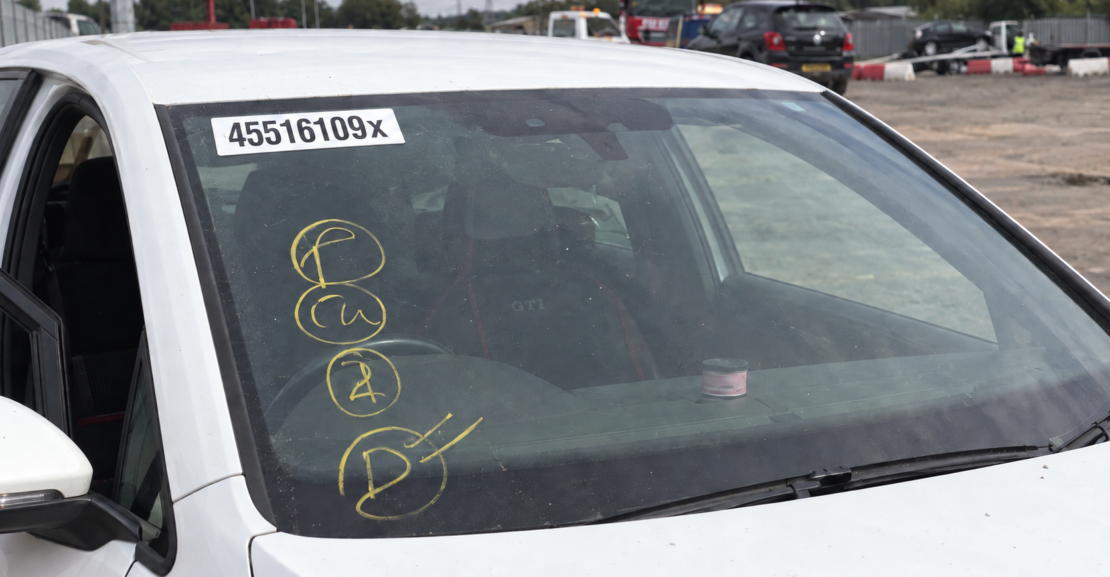
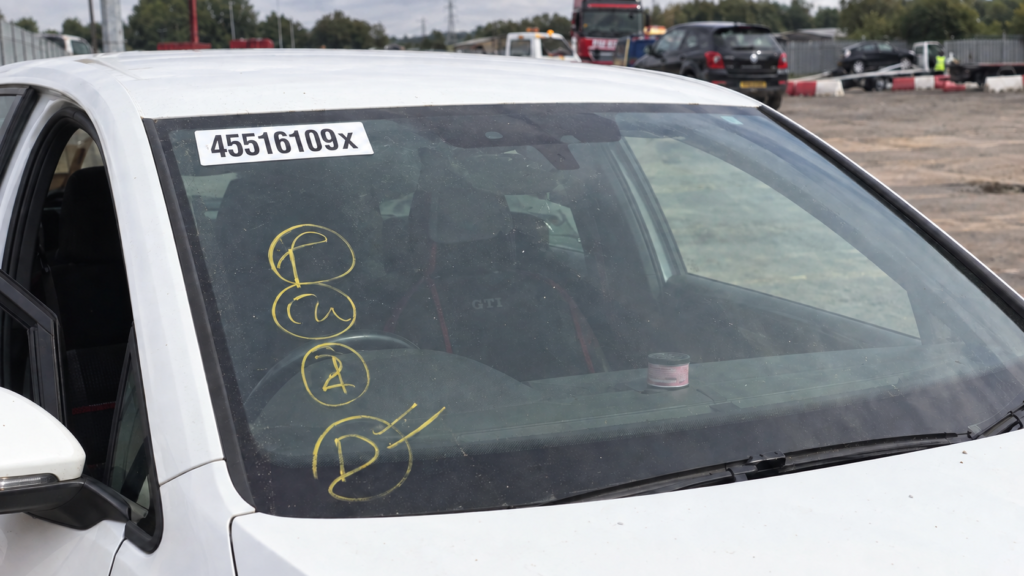
If you regularly browse Copart UK vehicles, you will have noticed letters and numbers written across windscreens in paint pen. You may also have spotted a letter at the end of the number on the white windscreen sticker.
A lot of online confusion comes from people discussing two separate things as though they are the same:
- Large handwritten paint-pen markings added to the glass as the vehicle moves through the yard.
- A letter suffix on the white windscreen sticker after the lot or processing number.
The same letter may mean something different depending on where it appears. These markings must also be kept separate from Copart’s official listing descriptions, such as Run & Drive, and from salvage categories such as Cat S, Cat N or Category X.
Copart does not appear to publish a complete official public key for these markings. This UK-focused guide reflects long-standing buyer knowledge, information shared by people familiar with yard processes and our own experience. Do not rely on a windscreen code instead of the official lot description, vehicle checks or an inspection.
Does R mean the car runs?
This is probably the most common mistaken assumption. A large R written on the windscreen is widely reported to mean Received or received/imaged — not that the vehicle runs.
That matters because buyers can see an R and reasonably assume that somebody at the yard has confirmed the engine runs. It should not be treated as proof of that.
Copart’s official Run & Drive designation is separate. It means that, when the vehicle arrived at the facility, Copart verified that it started, could be put into gear and moved forwards under its own power. Even that is not a guarantee of its condition at the time of sale.
Commonly reported paint-pen letters
The following meanings have circulated for years among UK Copart buyers and people familiar with yard operations:
- R — received or received/imaged.
- D — driver.
- S — starter.
- N — non-runner.
- MN — mechanical damage.
- ICE — reportedly connected with an engineer’s report; it does not mean somebody has checked the in-car entertainment system.
Ticks, stars, circles and lines may also be process marks used to show that a check or report has already been completed. They are useful clues, but they are not a published mechanical inspection.
What does X mean on a Copart windscreen sticker?
On UK vehicles, an X suffix at the end of the number on the white windscreen sticker is commonly associated with insurer-entered stock. In our experience, it is often a useful clue that the vehicle has come directly through an insurance seller.
However, “usually” is the important word. Internal processes can change, and a suffix alone is not definitive proof of a vehicle’s history.
A sticker number ending in X does not itself tell you that the car is a Category X or unrecorded vehicle. The sticker suffix and the vehicle’s insurance category are separate things.
What does P mean?
A P suffix on the white sticker is commonly regarded by experienced UK buyers as a clue that the vehicle may be a private or other non-insurer entry. We have repeatedly noticed this on vehicles whose listing notes also contain wording telling the buyer to make their own checks.
There is an important source of confusion here: other insider explanations use letters including P and N for particular insurance imaging instructions, such as taking extra photographs of wheels, controls and the interior. That may refer to a different position, system or stage of processing — not necessarily the sticker suffix buyers are looking at.
In short, always ask: is the letter handwritten on the glass, or is it printed as the suffix on the sticker?
Other reported sticker or processing codes
Information shared by people familiar with Copart UK processes has also linked the following letters with seller type or photography instructions:
- C — trade car or private entry, typically with additional buyer notes.
- Q — Copart trade vehicle, reportedly requiring extra images.
- X, E or F — normal insurance stock/process.
- P or N — insurance vehicles for which extra photographs or checks may be required.
These descriptions should be treated as working yard-process information rather than an official grading system. They do not tell you how severe the damage is, whether the vehicle is mechanically sound or whether it is a good buy.
Four assumptions to avoid
- R on the glass does not necessarily mean “runs”.
- X at the end of a sticker number does not mean Category X.
- N written on the windscreen does not mean Category N.
- ICE does not refer to the stereo.
You should not assume the same codes apply to Copart USA. This guide relates specifically to markings seen at Copart UK. Vehicle titles, yard processes, seller requirements and terminology can vary between countries.
What should you rely on before bidding?
Treat the markings as clues, not guarantees. Before bidding, check the full listing and photographs, the stated seller type where available, the damage and run-condition descriptions, the vehicle’s history and whether the notes contain any warnings or instructions for buyers.
If possible, inspect the vehicle or arrange an independent inspection. Allow for undeclared or unseen damage in your maximum bid, particularly when the entry is private or trade stock and the notes place the responsibility firmly on the buyer.
Windscreen markings can tell an experienced buyer something about how a car entered or moved through the auction process. They cannot tell you everything you need to know about the car.
UK buyer guidance, checked on 18/09/2026. Copart does not publish a complete public key for every yard marking and internal processes may change. Have you worked in a UK salvage yard or seen a code we have missed? Contact Salvage.Direct with a clear photograph and the yard/date so we can keep this guide accurate.